
How Will the US Attack Iran?

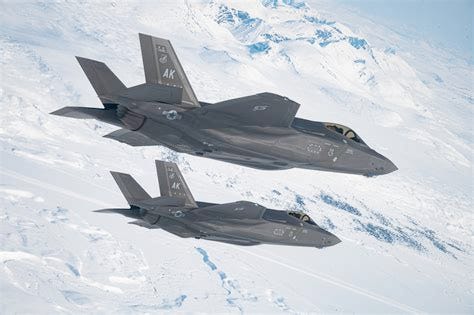
The threat of an imminent US attack on Iran has abated… for the moment at least. Donald Trump said that there will be at least one more round of talks between the US and Iran before a new attack would be launched. Iran is willing to do a deal that will guarantee it will not build a nuclear weapon and will likely make some concessions on the enrichment of uranium. However, Iran will not agree to eliminate or reduce its arsenal of ballistic missiles and drones, nor will it end support for groups like Hamas and Hezbollah. If Trump insists on Iran destroying its ballistic missiles and terminating support for the Palestinians and Shia in West Asia, there will be a war.
But launching an attack on Iran poses many significant challenges… Some which may be insurmountable. Let’s start with the two most likely attack vectors: air-to-ground missiles launched by F-35s and Tomahawk cruise missiles launched from destroyers located in the Arabian Sea.
Let’s start with the F-35s. The US Air Force flies the F-35A while the US Navy/Marine Corps flies the F-35C. The US Air Force (USAF) typically assigns 24 F-35A Lightning II aircraft to a standard operational fighter squadron. Squadrons are generally organized into six flights of four aircraft each, allowing for efficient maintenance, training, and deployment rotations. The US air force has between 20 and 25 active squadrons.
As of mid-February 2026 (around February 12–13), the US Air Force (USAF) has a limited but growing number of F-35A Lightning II aircraft based or deploying in the Middle East (U.S. Central Command / CENTCOM area of responsibility). Recent deployments involve F-35As from the Vermont Air National Guard’s 158th Fighter Wing (Burlington ANGB, Vermont). Reports indicate 12 F-35As in total heading toward (or already arrived) Jordan.
The primary airfield in Jordan currently associated with US Air Force deployments, including the reported recent arrival of F-35A fighters (from the Vermont Air National Guard’s 158th Fighter Wing), is Muwaffaq Salti Air Base (also spelled Muwaqqar Salti or Al Muwaffaq Salti, ICAO: OJMS). It’s a Royal Jordanian Air Force base, which is located near Azraq in Zarqa Governorate, eastern Jordan, that the US has used extensively for years, with significant upgrades funded by the US (e.g., $143 million expansion starting in 2019, new facilities, aprons, and a control tower).
Off the southern coast of Iran, the US Navy/Marine Corps operates F-35Cs (carrier variant) aboard the USS Abraham Lincoln (in the CENTCOM area since late January 2026), with one squadron (typically 10–14 aircraft, e.g., VMFA-314 “Black Knights”) embarked. These are not USAF assets.
In addition to the Marine squadron on board the USS Abraham Lincoln, the carrier is accompanied by three destroyers: the USS Frank E. Petersen Jr. (DDG‑121), the USS Spruance (DDG‑111), and the USS Michael Murphy (DDG‑112)—all are Arleigh Burke‑class guided‑missile destroyers, according to multiple official and media reports. These ships use the Mark 41 Vertical Launching System (VLS) for missiles and each carries 96 cells total (32 forward + 64 aft).
The exact mix in the VLS cells is highly variable and mission-dependent—no fixed “standard” loadout exists, as it changes based on theater, threats (e.g., air defense focus vs. land strike), stock availability, and tasking. If the destroyers’ primary mission is air defense, then most, if not all, of the 96 cells will be loaded with air defense missiles, such as the SM-6 (RIM-174, multi-role: long-range air defense, anti-ship, terminal ballistic missile defense). But the case of Iran requires the use of Tomahawk cruise missiles, which are designed for land-based targets. In land-attack focused deployments like the Iran contingency, higher Tomahawk loads are common to enable rapid, long-range precision strikes… This means 50 to 60 Tomahawks per destroyer. This also means that each destroyer would only have 36 to 46 air defense missiles. Working on the assumption that the destroyer would fire two Aegis missiles to defeat one inbound Iranian threat, each destroyer could only fend off 18 to 23 attacks.
That is the first big problem… If Iran launches swarm attacks employing 50 drones and/or anti-ship missiles against each destroyer, the carrier strike group would have to withdraw from the battle and sail to Diego Garcia to re-load.
The next big challenge is the air attack, most likely using the F-35A and F-35C squadrons. Based on public reports, there are 12 F-35As in Jordan and 10 F-35Cs on the Abraham Lincoln. Let’s start with the carrier based planes… The F-35C, the carrier variant, has a combat radius of approximately 600 nautical miles (1,110 km) on internal fuel in stealth mode (internal weapons bays only, no external stores). If the Abraham Lincoln sails within 100 nautical miles of the Iranian coast, the carrier-based jets could only fly halfway to Tehran before they would have to return to the carrier. Putting the carrier that close to the Iranian coast significantly increases the risk of attacks by anti-ship missiles.
With respect to the land-based F-35As, they must carry their weapons in two internal weapons bays in order to maintain stealth (with four stations total: two inboard for air-to-air missiles, two outboard for larger munitions up to ~2,500 lb each),. This allows for a clean radar signature during penetration missions. Standard internal loadout (common for stealth air dominance or initial strikes) consists of 2 × GBU-31 JDAM (Joint Direct Attack Munition, typically 2,000 lb class with MK-84 or BLU-109 warhead) in the outboard stations, and 2 × AIM-120 AMRAAM (Advanced Medium-Range Air-to-Air Missile) in the inboard stations.
The land-based F-35As also have a combat-radius problem… The distance from the Jordanian airfield to Tehran is in the 850–900 mile range (often cited as “just over 500 miles from the Iranian border,” with Tehran deeper inland adding distance; some reports approximate ~900 miles or ~1,000 miles in broader regional context, but precise point-to-point is closer to 850–900). All of this assumes a direct line of flight. But Saudi Arabia and Iraq reportedly have denied the US the use of their airspace to attack Iran. Whether the US would choose to ignore their request is another matter.
In order to fly deeper into Iran the F-35As will need to be refueled somewhere over Iraq. That creates another major threat… The Chinese reportedly have supplied Iran with a 3-D radar that has a range of 420 miles (aka 700 kms). If Russia has supplied Iran with S-400 air defense missiles, which have an effective range of 240 miles, then the Iranians will have the ability to engage the US aircraft well before one enters Iranian air space.
I close with an even bigger question… If the US military, with two aircraft carriers, four destroyers and one cruiser could not destroy the missile capability of the Houthis, why do the Generals in the Department of War think they can wipe out Iran’s missile capability with a smaller force?
Garland Nixon and I discussed today the prospects for an attack on Iran and Trump’s meeting with Bibi:
I also had a last minute request to appear with Alex and Alexander at The Duran:
Can't trust Trump. He will call for another round of negotiations and strike before they even happen. He's done it before, he'll do it again.
There are also submarine launched tomahawks (UGM-19) and B-21s (not all military unit movement can be detected by civilians). But still, the total payload is well below the needed destruction. The scenario I hoped for is that the US launches a limited attack based on assets at hand (including the unannounced presence of nuclear subs and B-21). Iran launches heavy counterstrikes against Israel and knocks out a handful of F-35 and one destroyer. US Navy withdraws to reload. Iran suffers major damage and casualties but maintains the bulk of its long range missiles. US and EU ground-based forces protect the sky of Israel. However, damages larger than those of the 12-day war cause severe internal splintering inside Israel after ammo exhaustion.
If the situation is resolved by somehow kicking the can down the road, we will have to come back to this matter again. We have an international banking crisis at hand, and it is really not a good time to have a major conflict in an area critical to world-wide economy. Delaying this event further is no guarantee that we have an easier pass in the burgeoning financial crisis. It may be better to ride with a perfect storm and blow up the power behind the fiat currencies.
If Israel uses nuclear weapons against Iran, Iran can survive several hits even if Iran becomes fragmented after the nuclear hit. Iran only needs to drop one nuclear warhead inside Israel. But even without nuclear weapons, I think Iran, after being hit by nuclear weapons, still can flatten Israel. Otherwise, Israel has to find a way to negotiate directly with Iran. If the US puts boots on the ground, it would be WW3. Now, the last possibility is what many Israelis truly hope for because they believe the gate to heaven will only open after a major catastrophic war. The rest of us are just collateral. But who cares about sub-humans (everybody not in the First Tribe)?