

Ukraine’s military capability to fight Russia on the battlefield is fading rapidly, so what does Ukraine and its NATO allies do? Produce more garbage propaganda that is designed to convince gullible Americans and Europeans that the West must continue to supply Ukraine with economic and military aid because the Russian economy is imploding.
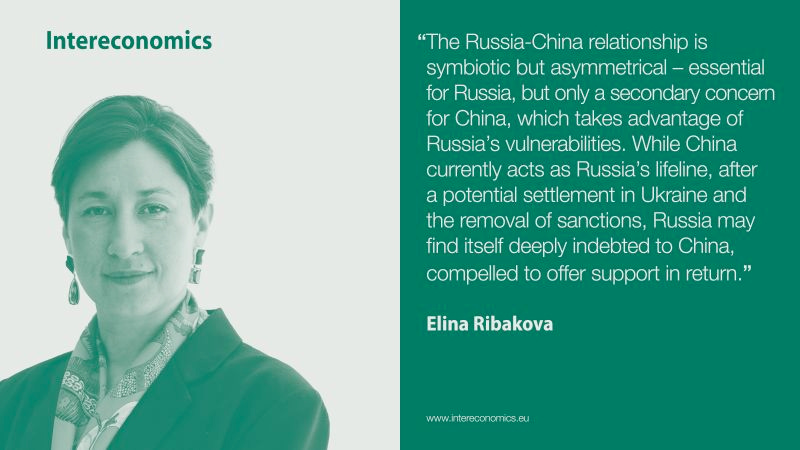
On Saturday, The Financial Times posted a ridiculous piece based on an interview with economist Elina Ribakova (director of the GeoEconomics Center at the Atlantic Council), who is a rabid supporter of Ukraine. Here are the key points in the article:
Wartime Growth and Overheating
“Russia’s economy has been one of the biggest surprises of the war in Ukraine. Despite the toughest western sanctions in history, it has grown by more than 4 per cent in both 2023 and 2024, outpacing most of its G7 peers. But now, that growth is faltering. Third-quarter GDP expanded by just 0.6 per cent from a year earlier, a sharp slowdown from the double-digit rates seen earlier this year. Investment has fallen for the first time in five years, and the central bank is warning of a ‘classical boom’ that risks turning into a bust. . . .
“Russia’s wartime spending has acted like a fiscal stimulus on steroids. Defence outlays are expected to reach 10.8 per cent of GDP this year, up from 4.1 per cent in 2021. This ‘military Keynesianism’ has boosted output in defence industries, construction and manufacturing, while consumer spending has held up thanks to wage hikes for soldiers and their families.
But the model is overheating. Inflation hit double digits earlier this year, forcing the central bank to hike rates to a post-Soviet high of 21 per cent in October. Even after recent cuts to 16.5 per cent, borrowing costs are choking investment: fixed capital formation fell 3.1 per cent in the third quarter, the first decline since the early pandemic. . . .
Putin and his economic team remember the real economic collapse of the 1990s that ravaged the Russian people… Two bouts of hyperinflation, suicides, a rapid decline in life expectancy among Russian men, and widespread criminal activity. Here is the Financial Times faulting Russia for taking steps to curb inflation and avoid the catastrophe that decimated Russia in the 1990s. As a result of the action by the head of Russia’s Central Bank, Elvira Nabiullina, to raise interest rates starting in October 2024 — an action fully supported by President Putin — the inflationary spiral has been brought under control. While it is true that this action produced a significant slowing of Russia’s economy, life in Russia for the average citizen is good, there are plenty of jobs, and the stores and food supplies are well stocked.
Sanctions’ Bite and Revenue Shortfalls
“Western sanctions have finally started to bite harder. The EU’s 14th package, effective from December 2024, bans re-exports of Russian refined products via third countries and targets the shadow fleet of tankers evading the G7 price cap. Russian oil revenues are down 25 per cent year on year, with Urals crude trading at a $20 discount to Brent.
Export bans on diesel and petrol, imposed in September to secure domestic supplies, have idled refineries and sparked black-market smuggling. Ukrainian drone strikes have damaged 16 of Russia’s 38 refineries since August, cutting output by 15 per cent.
This is simply not true. Hell, even US Treasury Secretary Scott Bennett, who remains a fanatical advocate of imposing more sanctions on Russia’s economy, admitted during an interview with NBC News in November that Europe’s imposition of its 19th batch of sanctions against Russia has failed… “If you have to do something 19 times, you’ve failed.” However, this does not mean that Bessent realizes that US sanctions also have been ineffective… He continues to insist that the US has some cards to play that will compel Putin to obey Trump. More delusional nonsense.
Labor Shortages and Demographic Crisis
“Russia’s workforce is shrinking fast. The war has claimed hundreds of thousands of lives, driven emigration (over 1 million since 2022), and mobilized 500,000 men. Unemployment is at a record low of 2.3 per cent, but this masks acute shortages: 2.6 million vacancies in manufacturing alone.
Wage inflation is rampant — up 20 per cent year on year — as factories poach workers with bonuses. Women are entering male-dominated fields like welding, but productivity is stagnant.
Have you ever heard an economist with this level of stupidity? Unemployment is at a “record low,” which in the view of the Ukrainian economist espousing this nonsense, is a bad thing? The Russians remember what happened 35 years ago when credentialed professionals, as well as blue collar factory workers, could not find a job. Many women, and some men, turned to prostitution to buy food for their families. Better to have too many job opportunities than no hope. And what about wage inflation? People are making more money and able to keep up with the rise in prices sparked by inflation and that is a bad thing? Looks like Ukrainian economists are just as incompetent as Ukrainian generals when it comes to grasping reality.
Central Bank Tightrope and 2026 Outlook
“The Bank of Russia faces a dilemma: ease rates to spur investment, or keep them high to tame inflation (now cooling to 6.5 per cent but with upside risks from VAT hikes). Governor Elvira Nabiullina has bought time with reserve drawdowns, but the National Wealth Fund’s liquid assets are down 50 per cent since 2022.
Forecasts for 2026 range from 0.5 per cent growth (official) to contraction (independent analysts). Stagflation looms if military spending doesn’t ease.
In June of 2025, Russian President Vladimir Putin announced plans to reduce military spending starting in 2026 during a press conference in Minsk, Belarus, following the Eurasian Economic Union (EAEU) summit. He stated that Russia intended to cut defense expenditures over the next three-year period (2026–2028), which contrasts this with NATO’s announced plans to increase spending to 5% of GDP.
Russia is running circles around the major industrial powers when it comes to debt-to-GDP. The major industrial powers include the G7 nations (US, Japan, Germany, UK, France, Italy, Canada), plus key emerging industrial giants like China, South Korea, India, and Russia (due to its significant heavy industry and resource processing sectors). Based on the latest IMF World Economic Outlook (October 2025) data, cross-verified with Visual Capitalist and World Population Review analyses, Russia has the lowest government gross debt-to-GDP ratio among these countries at 23.1%. This reflects Russia’s Fortress Russia fiscal prudence—low borrowing, high reserves, and oil revenues—despite wartime spending (defense at ~6-8% of GDP). Other sources (e.g., World Economics PPP-adjusted) place it even lower at 18.3%.
Conclusion
“As the war grinds on, Russia’s economic resilience is fraying. What began as a wartime boom is morphing into a painful adjustment, with civilians bearing the brunt through rationing and price surges. For the west, it’s a reminder that sanctions take time but can erode even the most resource-rich economies. Ribakova warns: ‘This isn’t sustainable. The question is how much damage before Putin blinks.’
This is just more bullshit. There is no rationing in Russia… I’ve been there four times this year and never encountered any restrictions or shortages. While prices have gone up, so have Russian wages… a fact acknowledged by the Ukrainian source for the FT article. Russia’s economy is not perfect, but Russian leaders are acting decisively and calmly to quell inflation, reduce military expenditures and forge stronger economic ties with China, India and the rest of the Global South.
The Ukrainian’s published a more bizarre “news” piece on Sunday, December 7, that is carries the title, Total CHAOS in Russia—Thousands Trucks Stuck as Fuel Crisis Hits Major Cities. Here is the central claim:
The kilometer-long truck queues on Russia’s main highways are not an accident; they are the picture of a self-inflicted, self-suffocating disaster created by the Kremlin. Putin’s 200-liter diesel fuel limit, introduced to feed the army, has paralyzed the country’s logistics backbone and left it in a strategic impasse: Zugzwang.
Nope. Just one more piece of desperate propaganda designed to persuade Donald Trump that Ukraine still has a chance to prevail if only the West coughs up more dough and munitions. Reminds me of this scene from the movie, Dumb and Dumber:
There ain’t no chance for Ukraine.
Here’s a recent interview I did with a gentleman from Iran:
The Financial Times applauded Yeltsin’s sacking of the Duma with tanks in 1993. It has been reliably wrong about Russia ever since.
Economists are routinely wrong and stupid, as the ”shock therapy” administered by the likes of Larry Summers and Anders Åslund inflicted a humanitarian catastrophe on the country. That fate awaits whatever remains of Ukraine once peace is established. And it will be of no comfort to Ukrainians that mouthpieces like this home grown shill Ribakova will be fronting the asset stripping masquerading as reconstruction.
The only hope that normal Ukrainians have is a complete takeover of the country by Russia. The USSA/NATO/EU, demonic cabal, will never rebuild the country and bring peace to the region. Trump is a delusional psychopath, with visions of grandeur.
If Americans turned off the MSM, ie, TV and Newsprint, and started to actually educate themselves, via, books like Provoked and similar exposes of the hegemon, and watched and listened to Larry Johnson, Col. Wilkerson, Scott Ritter, and the like, (there are a host of people who have caught on to the demonic and evil actions of the hegemon) then perhaps this country could survive. I have only a tiny spark of hope.