
Understanding Why General Caine Cannot Guarantee a Slam-Dunk Success if the US Attacks Iran

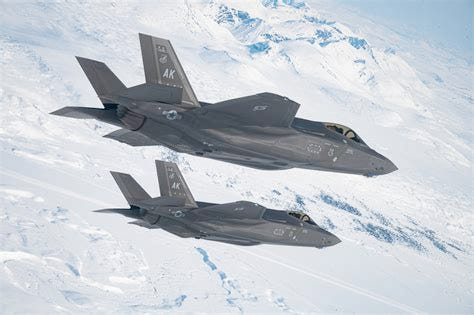
Why has Donald Trump deployed almost 30% of the US Air Force inventory of F-35A jets to Jordan and Saudi Arabia when these aircraft are unable to penetrate deep into Iran without air refueling near the Iranian border. They are essentially useless for inflicting damage on high priority targets in Iran if Iran’s air defense systems are intact. Let me explain.
I will try to make this as simple as possible… The majority of the combat aircraft the US has deployed to the Middle East are based in Jordan’s Shaheed Muwaffaq al-Salti Air Base, which is is roughly about 1,400–1,500 km (around 870–930 miles) from Tehran in a straight line, and Prince Sultan Air Base, which is 680–750 miles from Tehran.
The distance from Iran’s western border to Tehran varies depending on the exact point along the border, but here’s the real-world breakdown:
Straight-line (as-the-crow-flies) from the closest western border point—say, near Mehran or Qasr-e Shirin on the Iraq border—to Tehran: About 400–450 kilometers (248–280 miles).
From a mid-western spot like Kermanshah (a major city right on the border): Roughly 430 km (267 miles) to Tehran.
If you’re measuring from the far-western edge (e.g., near the Turkey-Iraq-Iran tripoint): Closer to 500–550 km (310–342 miles).
Averaging it out for military planning: ~425 km (264 miles) is the practical ballpark—about a 30–40 minute flight for an F-35 at subsonic cruise.
According to Lockheed Martin and US Air Force data sheets, the effective combat radius of an F-35A when flying in a stealth configuration (i.e., using only internal fuel and internal weapons bays to preserve low-observable characteristics) is >590 nautical miles (approximately 1,093 kilometers or 679 statute miles).
How is you addition and subtraction math skills? Let’s use Kermanshah as the point of reference for the flight plan of a squadron of F-35As that are trying to attack Iran. If those planes take off from Jordan, they will need to refuel when they are 200 nautical miles from the Iranian border. They would then have barely enough fuel to reach Tehran, drop their bombs and return to the border with Saudi Arabia.
But the F-35As most likely will be carrying a AGM-158B JASSM-ER (Extended Range, the current primary operational variant) with a 1,000 pound warhead. The maximum range of the AGM-158B is 575 miles (approximately 925–1,000 km). To have the best chance of an effective strike without entering Iranian air space, the F-35A should launch about 250 miles west of Iran’s border.
So what’s the problem? It is the YLC-8B Chinese radar that has been supplied to Iran. The YLC-8B is a three-dimensional, long-range anti-stealth surveillance radar developed by China’s Nanjing Research Institute of Electronics Technology. It’s a UHF-band radar, which is particularly effective against stealth aircraft because longer radio wavelengths are harder for aircraft to evade through traditional radar-absorbent materials.
Here are its key capabilities:
Detection range: Up to 700 kilometers (about 430 miles) for ballistic missiles, and around 270to 330 kilometers (170 to 205 miles) for conventional aircraft
Stealth detection: Specifically designed to detect aircraft with small radar cross-sections, including the F-35 Lightning II and the B-2 Spirit bomber, at distances exceeding 200 kilometers
Targets a one-square-meter radar cross-section at useful ranges
Rapid deployment: Can be deployed or dismantled in under 30 minutes, making it mobile and hard to target
Integration capability: Can reportedly be linked with BeiDou satellite navigation and integrated into air-defense networks
If that radar is deployed 30 miles from Iran’s western border, it will — in theory — be able to detect and target the F-35A squadrons 400 miles inside Saudi Arabian territory.
This is a genuine game-changer for Iran’s air defenses. Stealth aircraft like the F-35 rely on their low radar cross-section to approach targets undetected. The YLC-8B’s UHF-band operation partially neutralizes that advantage. Even if the radar doesn’t provide precise targeting data for SAMs, it can provide early warning and track approximate positions — which is invaluable for air defense planning and force deployment.
The maximum safe distance for airborne refueling of F-35As in Saudi territory—while avoiding detection by a YLC-8B radar deployed 30 miles (about 48 km) inside Iran’s western border with Saudi Arabia—would be approximately 380–430 miles (610–690 km) from the Iranian border, to err on the side of caution.
To summarize, the optimal launch point for an AGM-158B by an F-35A puts it well within the Chinese radar’s range for detection. Then there is the question of intercepting the AGM missile. The Russians reportedly have provided Iran with S-400 and S-300 air defense systems. The S-400 uses a family of missiles for layered defense, so the “maximum range” depends on which one is loaded. Consensus from reliable sources (e.g., Wikipedia aggregates, CSIS Missile Threat, GlobalSecurity.org, Army Technology, and Russian defense reports) breaks it down as follows:
40N6 / 40N6E (long-range, active radar homing): 400 km (250 miles) – This is the system’s advertised maximum for aerodynamic targets (e.g., aircraft, AWACS, cruise missiles at high altitude). It’s designed for standoff engagements, including potential over-the-horizon shots, and is the basis for claims of the S-400’s superior reach.
48N6 series (e.g., 48N6E3 / 48N6DM): 240–250 km (150 miles) – Common medium-range option, used for most intercepts including stealth aircraft, drones, and some ballistic threats.
9M96E2: 120 km (75 miles) – Shorter-range, high-maneuverability missile for tactical threats like low-flying cruise missiles or aircraft.
9M96E: 40 km (25 miles) – Point-defense variant.
So what does this all mean? As long as the F-35As stay outside the range of the 40N6/ 40N6E missiles, it is unlikely that Iran will be able to shoot down any of the US aircraft. However, the Chinese radar, working in tandem with the Russian S-300 and S-400 systems have a high probability of destroying the AGM’s before they reach their targets.
Iran is unlikely to be sitting passively waiting to be hit. While the US will be launching AGMs at Iranian targets, the Iranians will be launching drones and ballistic missiles at the air bases in Saudi Arabia and Jordan, as well as going after other US targets in the region. I think this helps explain with General Caine and CIA Director Ratclifffe reportedly told Trump that they could not guarantee the success of a surgical strike. This will mark the first time since the end of WW II that the US will engage a country with a missile/drone capability that could neutralize US air assets and inflict heavy damage of US and ally military infrastructure.
Here is my latest video at Counter Currents… I discuss the Three Big Lies about Iran that the US is feeding to a gullible public:
Danny Davis and I had a lively discussion — mostly centered on Iran and the looming US attack — and we came to the amusing conclusion that German Chancellor Mertz bears a remarkable resemblance to a beloved South Park character:
Patrick Hennignsen and I were hosted by Danny Haiphong. The discussion is resonating on social media with 350,000 views so far:
Almost 30% of the US Air Force inventory of F-35s are fully mission capable. Meanwhile, the F-35A reaches a full mission capable performance level of just over 33%. These statistics come from the General Accountability Office report of 2023:
https://www.gao.gov/assets/870/861566.pdf (see page 96 for most recent data)
Who would buy a car with this sort of track record? "Uh, these are really expensive and we have experienced running problems in over two thirds of these and getting parts can be tricky, but when this thing works, I can promise you the drive of your life."
Maybe this is a huge psyop and the F-35 is in reality a game changer. Tell that to the Australians:
https://johnmenadue.com/post/2022/12/we-should-ask-for-a-refund-on-the-f-35-fighter-planes-not-buy-more/
Of course, since 2023 there could have been significant improvements in quality and performance. It seems unlikely, however, that these would reach levels of, say, 75%, which would still hardly reassure a car buyer.
Given what we know about Iranian missile capability, this deployment looks like reckless endangerment of what relatively few fully functional military aircraft (and naval vessels!) the US would have at its disposal. Compared against its intensifying efforts to encircle Eurasia *and* impose its will upon the western hemisphere (and the extended West), this looks completely unsustainable.
Those Epstein files must be really explosive to merit this kind of decoy.
Honestly, I could not look at and listen to DJT Tuesday evening. I have just read some stories and fact-checks, and sure enough--he insulted, belittled, and lied. A few things he said that especiallly irked me:
~"Iran is working on missiles that will soon be able to reach the United States of America” and that "it has started pursuing a nuclear weapon all over again after U.S. and Israeli attacks June 2025 severely damaged three of Iran’s nuclear facilities." Trump said right after the bombing (and continued to say) that Iran's nuclear program had been "obliterated". All false!
~"I will never allow the world’s number one sponsor of terror — which they are, by far — to have a nuclear weapon." Totally false! Refer to Larry's post "The Big Lie About Iran's Support for Terrorism" Feb.16, 2026
~Trump said that we have been fighting in the American Revolution since 1776. Get your US History facts correct, Mr.POTUS--the Revolution began in 1775, and ended in 1783.
~My final irritation is in the realm of fluff. What is up with the Trump women dressed in pants (with the exception of Ivanka)? What happened to dresses for a POTUS's female family members for such an important event? Where's the decorum? And Melania was dressed the most casually of all.