
The Galling Gallium Chokehold: Why the US Cannot Produce Precision Missiles and Fully-Functional F-35s

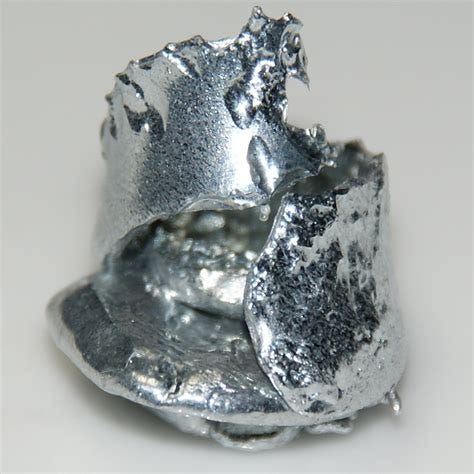
Kudos, again, to Kevin Wamsley of Inside China Business. Based on his latest podcast (see below) I did some additional digging. The substance of his video briefing is shocking and alarming, at least for US policymakers and weapons manufacturers. There is a single thread running from the empty nose cones of America’s newest stealth fighters to the laboratories where China is building the internet of the 2030s. That thread is gallium — a soft, silvery byproduct of aluminum refining that almost no one outside a materials-science department thinks about, and that the United States does not produce at all.
A metal America stopped making
The top line from the US Geological Survey is stark: the United States has had no primary domestic gallium production for decades, and its net import reliance sits at 100 percent. China, by contrast, controls the overwhelming majority of global output — figures commonly cited run from 94 to 98 percent of raw production. The reason is structural, not incidental. Gallium is extracted as a byproduct of bauxite and zinc processing, industries China dominates. A country cannot simply decide to make gallium; it must first build the aluminum and zinc industries that yield it, then the extraction, refining, wafer, and packaging lines on top. That is a decade-plus undertaking, not a budget line.
This dependency became a weapon in December 2024, when Beijing banned exports of gallium, germanium, and antimony to the United States, explicitly prohibiting sales to US military end-users. It was retaliation for American semiconductor export controls, and it landed on a Pentagon that, by the USGS’s own accounting, had no gallium in the National Defense Stockpile to fall back on.
One crucial update the alarmist version of this story often omits: in November 2025, as part of a broader trade truce between Presidents Trump and Xi, China suspended the civilian portion of that ban until late November 2026, moving those exports to a licensing regime. But the suspension came with a catch that matters enormously — the prohibition on exports to military end-users stayed in force. So the civilian supply reopened on Beijing’s sufferance, revocable at will, while the weapons-makers remained cut off. The chokehold didn’t release; it was repositioned.
The fighters with counterweights where radars should be
The most vivid symptom of this dependency is also the most easily misunderstood. It is true — confirmed through photographic evidence and industry reporting, though initially denied by the Department of War — that F-35s built from Lot 17 onward are being delivered with counterweights, literal ballast, in their nose cones where radars belong. Reporting has put the number affected in the hundreds.
But the cause is more tangled than “China cut off the gallium.” The immediate culprit is the delayed development and certification of the AN/APG-85, the next-generation radar meant to replace the older AN/APG-81. The APG-85 is built on gallium-nitride (GaN) technology, which delivers far higher power and better thermal efficiency — and demands roughly 82 kilowatts, forcing structural, cooling, and power redesigns to the aircraft’s forward fuselage. Jets from Lot 17 were redesigned to accept the APG-85 and can no longer take the old APG-81. When the new radar slipped, those aircraft had nowhere to turn but counterweights.
Gallium supply is the aggravating factor layered beneath that engineering delay: GaN radars use far more gallium than their predecessors, the DLA has struggled to source it as Japan and Germany lack the capacity to fill the gap, and prices have surged. The honest framing is that America faces a radar-development problem and a materials problem, and China’s monopoly sits underneath both. Meanwhile, China has moved its own J-20 fighter to a next-generation radar reportedly built on the same GaN technology — the qualitative gap the APG-85 was meant to open is instead narrowing.
The vulnerability extends well past one airframe. Gallium nitride underpins the high-power jammers on the EA-18G Growler, the F-35’s own electronic-warfare suite, and the large ground-based radar arrays of the kind destroyed during the fighting in the Persian Gulf. The Pentagon’s supply chains reportedly touch Chinese suppliers across a vast share of weapons components — the dependency is systemic, not a single point of failure.
The same monopoly, pointed at the future
Here the story turns from defense to something larger. The same industrial base that lets China throttle radar production also lets Chinese researchers race ahead on the technology expected to define the next quarter-century of connectivity: 6G.
The headline achievement is real and was published in Nature. A team led by scientists from Peking University and the City University of Hong Kong built what they describe as the world’s first “all-frequency” 6G chip — a device roughly 11 by 1.7 millimeters that integrates the entire wireless spectrum from 0.5 to 115 gigahertz onto a single chip. That span previously required nine separate radio systems. In testing it exceeded 100 gigabits per second on a single channel, which independent write-ups translate to roughly 500 times the real-world speed most users get from 5G today, and it can retune across 6 gigahertz of spectrum in 180 microseconds to hop clear of interference. The researchers built it not from gallium but from thin-film lithium niobate, using a photonic-electronic design, and they intend to shrink it into plug-and-play modules for phones, base stations, drones, and IoT devices.
The strategic point survives the technical correction. Whether the enabling material is gallium in a radar or lithium niobate in a transceiver, the pattern is the same: China increasingly controls both the raw inputs and the pipeline of scientists and engineers turning them into deployable systems. And 6G’s importance is not really about consumers. Few individuals need to download a library of films in seconds. The demand comes from industry — precision robotics, advanced manufacturing, private industrial networks, integrated sensing, low-altitude drone economies — the very sectors where China has already built commanding positions. 6G’s promised leap in speed, latency, and integrated sensing is a boon precisely to the industrial base China is busy consolidating.
The standards are the prize
There is one more dimension that outlasts any single chip. 6G has not yet been standardized worldwide; the global protocols are still being written, precisely because the systems are still being built. Standards bodies — 3GPP, the ITU, the O-RAN Alliance — are only now moving 6G from research into formal specification, with first specs targeted around 2029 and commercial networks around 2030. Whoever builds the working systems first shapes the standards everyone else must adopt.
The Trump administration has recognized the stakes, declaring 6G foundational to U.S. national security, foreign policy, and economic prosperity, and setting a policy of American leadership — directing work on spectrum, commercial applications, and diplomatic coalitions to back the U.S. position. The Boston Consulting Group projects that 5G’s roughly $1 trillion in economic output could grow toward $18 trillion by 2035, with 6G enabling entirely new enterprise models and large-scale AI across manufacturing, cities, healthcare, and public safety.
But intent collides with the same wall. The United States cannot lead in building what it cannot supply. Leadership in 6G requires the mining, refining, fabrication, and — above all — the tens of thousands of trained engineers applying the technology at scale. China is doing that work now. America is still debating how to start.
The bottom line
Strip away the hyperbole and a hard core remains. Today, U.S. contractors cannot reliably put advanced radars on hundred-million-dollar aircraft, in part because China controls a metal America stopped producing forty years ago. Ten years from now, on current trajectory, anyone who wants the best phones, drones, or robots may find the critical components — and the standards they run on — routed through that same country. Supply chains are the whole game, and so are the researchers who turn raw materials into markets. That is the argument, and the uncomfortable part is how much of it is simply true.
Here is Kevin’s video:
I missed the Friday INTELRountable, so it was good to be back with Judge Nap talking about Donald Trump as the Run Away Bride:
Nima still trying to understand why Trump TACOed again:
Mario highlighted Israel’s growing frustration with Donald Trump:
This begs the question: Are the procurement people at the Pentagon as completely incompetent as this article demonstrates? It was obvious to me that the U.S. needed domestic production of rare earths 15 years ago.
😀Big Thanks😃